Open BRL: Six Brazilian Banks Back 2027 Stablecoin
 DM
 Newsroom
Why did Brazil's six largest banks decide to create a single real-based stablecoin instead of competing with their own tokens?
How will the launch of Open BRL change Brazil's cryptocurrency and financial market structure?
What makes Open BRL different from other stablecoins in Brazil, and what future innovations are expected with its introduction?
- Open BRL, a real-backed stablecoin, will be launched in 2027 by Brazil’s top six banks and Banco B3 for settlements and tokenization.
- The initiative is set to modernize payments and asset trading under new regulatory rules.
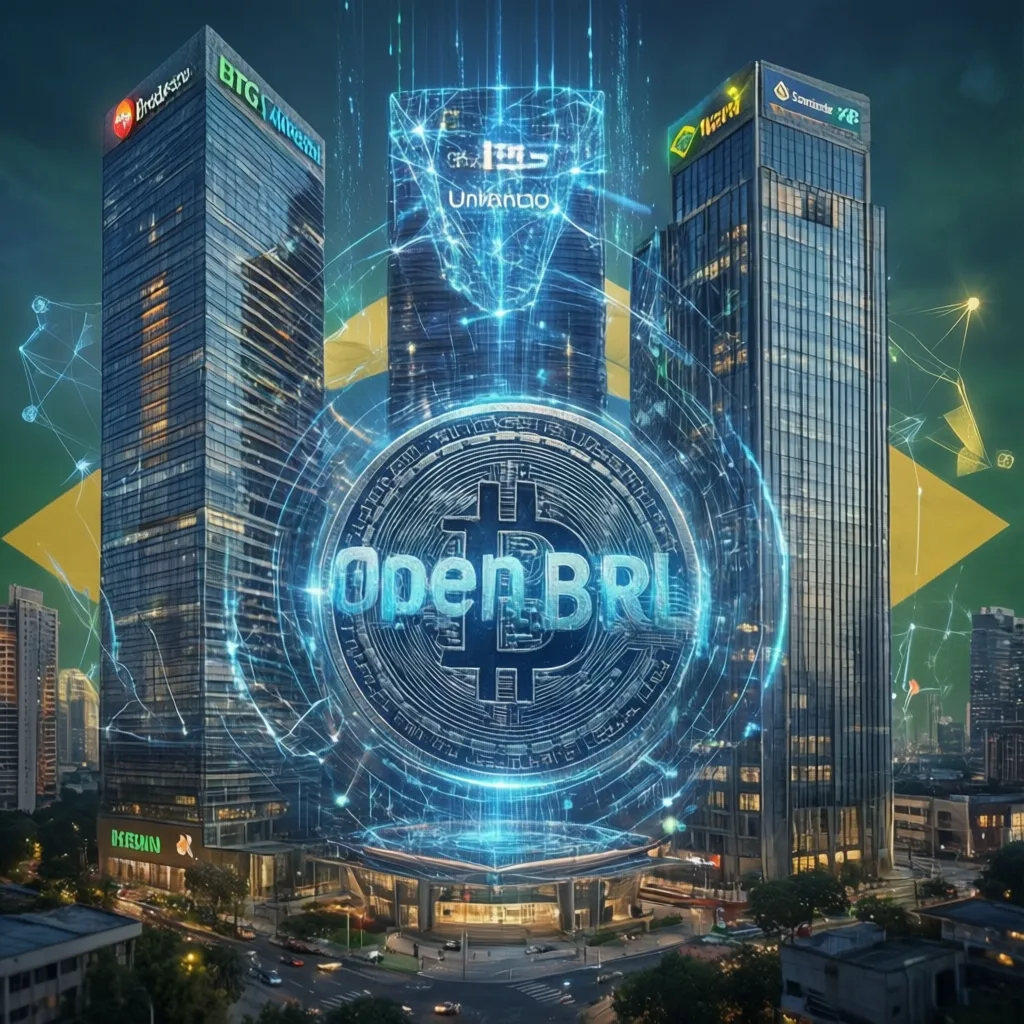
Brazil’s six largest financial institutions—Bradesco, BTG Pactual, Itaú Unibanco, Safra, Santander, and XP—are set to launch a shared stablecoin, Open BRL, issued by Banco B3. Scheduled for rollout in the first quarter of 2027, this collaboration aims to deliver the country’s first jointly governed, real-backed stablecoin for interbank settlements and the tokenization of stocks and securities traded on the B3 exchange. In uniting these leading banks, the project marks a significant shift in how Brazilian finance approaches blockchain-based settlements and payments.
This announcement follows new, stricter rules announced by Brazil’s central bank in November 2026, which raised licensing standards for service providers and increased anti-money laundering requirements for stablecoin issuers. Open BRL’s shared framework was specifically designed to address these regulations, consolidating oversight and liability under consortium governance while neutralizing competitive tensions that arise when banks issue tokens independently.
A committee with representatives from each participating bank will define rules, standards, and pricing for Open BRL, while Banco B3 will handle issuance and reserve management. This structure is intended to foster broad industry adoption by ensuring Open BRL serves as a neutral payment and settlement instrument, simplifying compliance amid Brazil’s evolving regulatory environment.
According to BeLoud, Open BRL could reshape payments and securities settlement nationwide. While joint stablecoin ventures are emerging in regions such as Japan and Europe, Brazil’s crypto market is still led by dollar-pegged coins like USDT, with local real-backed stablecoins such as BRZ representing only a small portion of trading activity.
By aligning on Open BRL, Brazil’s biggest banks are positioning to drive mainstream adoption of tokenized finance, potentially accelerating innovation and efficiency in both payment and asset markets as the regulatory landscape matures.

Get real-time crypto breaking news on Unblock Media Telegram! (Click)