Korean Crypto Exchanges Pivot After 55% Volume Crash
 DM
DM Newsroom
Why has the trading volume at Korean won-based crypto exchanges dropped by more than 54% recently?
How are Korean crypto exchanges responding to the decline in trading volume and retail investor departure?
What changes are happening between traditional financial institutions and crypto exchanges in Korea as regulations tighten?

- South Korea’s top five crypto exchanges reported a 54.6% plunge in trading volume in H1 2026.
- Exchanges race to secure institutional partners, bank integration, and regulatory survival strategies.
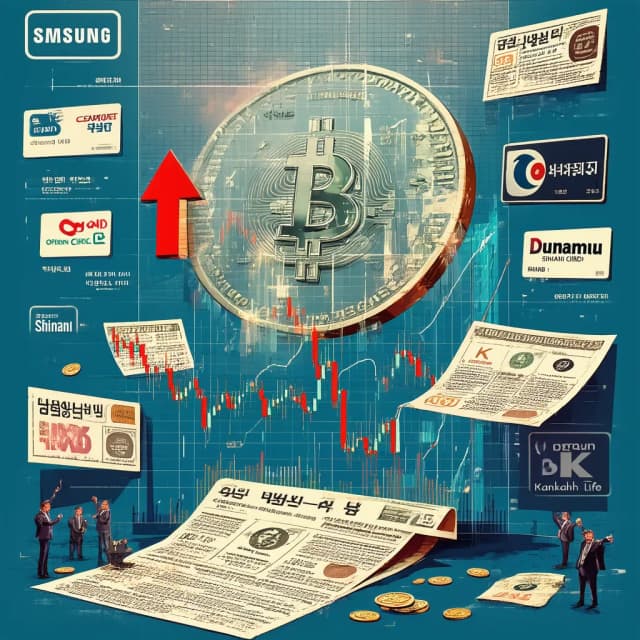
On August 1, 2026, Cryptopolitan reported that South Korea’s five largest won-based crypto exchanges—Upbit, Bithumb, Coinone, Korbit, and Gopax—saw their combined trading volume fall 54.6% year-over-year in the first half of 2026, dropping to $366.58 billion. Daily trading on these platforms now averages just 1.6% of the KOSPI stock market’s activity, down sharply from a peak above 11% in January. Industry analysts have labeled this downturn as Korea’s “second crypto winter,” compelling exchanges to restructure their operations and focus on survival.
In response, major exchanges have shifted their business models away from retail trading, targeting institutional partnerships and services. Coinone integrated Korea Investment & Securities trading capabilities into its app, following a joint investment from Korea Investment & Securities and OKX Ventures. Mirae Asset acquired 97.15% of Korbit, with further regulatory tightening expected on August 20, and is rebranding Korbit as “DigitalX.” This move emphasizes digital asset custody, stablecoins, and tokenized assets for corporate and institutional clients, narrowing the platform’s exposure to retail users.
Traditional banks and brokerages have also deepened their integration with digital asset exchanges, seeking regulatory advantages through real-name bank account partnerships. Mirae Asset’s acquisition gave it a unique position as Korbit’s relationship with Shinhan Bank remains a regulatory asset. According to Tech Times on July 24, 2026, this avenue is becoming increasingly rare, as new entrants must now acquire existing VASPs to access such partnerships. This trend highlights the financial sector’s urgency to secure licenses and infrastructure ahead of new government regulations.
Market concentration has accelerated as trading activity dries up. Upbit expanded its market share from 62.3% to 67.4% by July, despite the overall decline, while Bithumb’s share slipped to 27.1%. Upbit briefly waived fees on select stablecoin pairs to retain transaction volume. Gopax, the smallest exchange, has prioritized customer compensation and compliance after losses tied to FTX, facing stronger regulatory scrutiny.
Bithumb has continued to struggle with ownership and regulatory issues, blocking efforts to secure a stable banking partner amid continuing legal disputes. Occasionally, trading volumes briefly spiked during surges in KOSPI stock market volatility, particularly after a significant dip in late July, as capital shifted between traditional and digital assets.
As reported by The Korea Times on June 15, 2026, the nation’s crypto sector is undergoing an “institutional pivot.” Banks, brokerages, and asset managers have rushed to acquire or partner with registered virtual asset businesses, seeking regulatory infrastructure before the next round of policy tightening. Tiger Research notes intensifying competition among exchanges for stablecoins, security token offerings, and custody solutions. Ripple’s recent deals with KBank and Kyobo Life underscore the growing integration between blockchain and Korea’s financial sector, marking increasing dominance of traditional institutions in digital asset operations.
South Korea’s crypto exchanges remain in survival mode as retail activity dries up. Platforms are accelerating restructuring, securing institutional partnerships, expanding banking integration, and shifting regulatory strategies. The market’s next stage hinges on consolidation and aligning digital assets with established financial companies, while trading volumes remain subdued relative to equities.
As of August 1, 2026, 16:09 UTC, Tether USDt (USDT) is trading at $0.999, up 0.031% in 24-hour volume. Bitcoin (BTC) stands at $62,915.77, up 0.192%. Ethereum (ETH) is quoted at $1,868.67, recording a 0.291% change, according to the latest market data.

Get real-time crypto breaking news on Unblock Media Telegram! (Click)