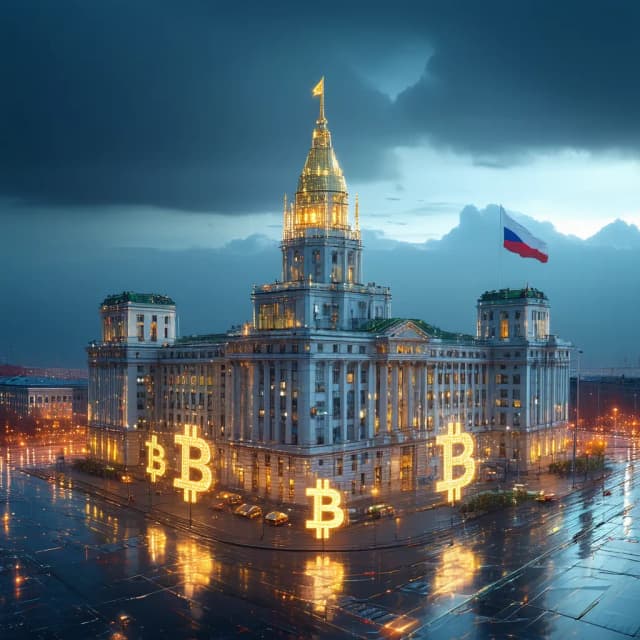
Putin, Crypto, Africa: $600B Summit Spurs Cross-Border Trade Push
 DM
 Newsroom
Why did Russia officially adopt digital currency payments for international trade?
What impact might Russia's expansion of digital currency payments have on the global economy?
Does Russia's policy shift increase concerns about sanction evasion or financial crime risks?

- Russian president urges African leaders to adopt crypto for cross-border settlements
- New Russian law allows regulated crypto trading for foreign trade—domestic payments still banned
On October 29, 2026, Cryptopolitan reported that Russian President Vladimir Putin, speaking at the $600 billion Russia-Africa Summit, urged African government leaders to use cryptocurrencies for cross-border settlements. Putin argued that crypto transactions cannot be blocked, enabling partners to bypass US dollar reliance and international sanctions.
This call follows Russia’s legislative shift, which took effect September 1, 2026, legalizing regulated cryptocurrency trading for foreign trade. The law, highlighted in Cryptopolitan’s coverage, enables Russian entities to use crypto for international settlements, while domestic cryptocurrency payments remain prohibited.
Moscow aims to reinforce financial sovereignty and expand global influence, especially among Africa, Asia, and the Global South, by providing alternatives to dollar-based payment systems and circumventing sanctions. The Russia-Africa Summit showcased Moscow’s economic strategy—deepening trade ties and promoting new settlement methods outside traditional banking.
Putin’s push reflects Russia’s ongoing policy to develop alternative mechanisms for international settlements in line with broader foreign policy goals.
As of October 29, 2026, 15:09 UTC, Bitcoin (BTC) is trading at $81,256.36, up 0.93% in 24-hour trading volume. Ethereum (ETH) is at $2,350.28, with a 0.81% change, according to CoinMarketCap.

Get real-time crypto breaking news on Unblock Media Telegram! (Click)