Trump Orders Force Pause on 2 AI Flagship Models, Spurs Federal Oversight
 DM
DM Newsroom
What specific reasons did the US government give for shutting down new AI models just three days after their launch?
How is this AI regulatory crisis affecting AI companies' investments and their IPO plans?
How might the conflict between federal and state governments over AI regulations impact the AI market going forward?

- Executive orders mandate classified pre-release vetting and give federal agencies new power over advanced AI distribution.
- Federal action hasn’t overridden state laws, leaving developers in a complex patchwork of compliance.
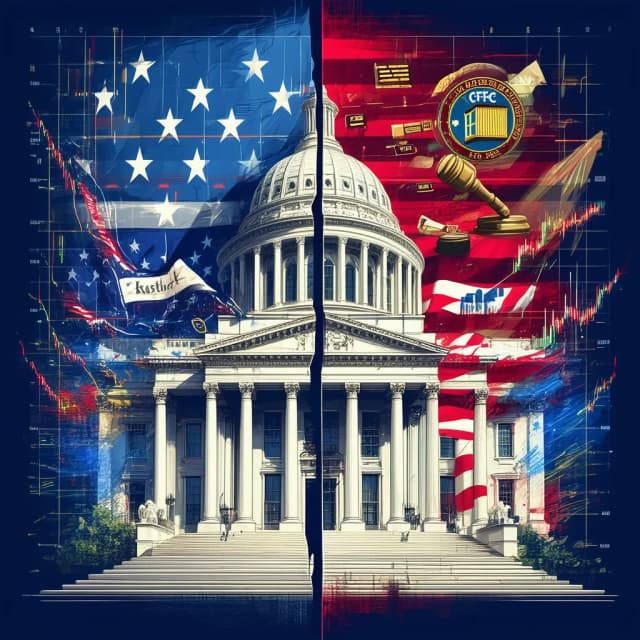
On July 2, 2026, CoinDesk reported that a series of Trump administration executive orders have fundamentally changed how U.S. firms bring advanced AI models to market, directly impacting major releases like Anthropic’s Fable 5 and OpenAI’s GPT-5.6. Over the past seven months, agencies have demanded classified testing, government access, and up to 30 days of pre-release reviews for so-called “frontier” AI systems, with sweeping effects for developers and users nationwide.
The first executive order, issued December 2025, directed the Commerce Department to review state AI rules for conflicts with federal policy and established a legal team aimed at challenging any state regulation seen as holding back AI progress. By June 2026, a second order tasked the National Institute of Standards and Technology (NIST) with creating classified testing benchmarks and formalized the federal vetting period, during which AI companies must grant full government access to unreleased models.
According to Axios (June 30, 2026) and AP News (June 28, 2026), these moves enabled federal agencies to temporarily halt or restrict model launches, prompting both Anthropic and OpenAI to pause or sharply limit access to their latest systems. Commerce Secretary Howard Lutnick announced new export controls, requiring companies to block some foreign users and suspend broader U.S. distribution until government reviews finished.
Forbes reported on July 1, 2026, that while some export restrictions were lifted quickly, “Trump-approved customers” were among the few permitted to test the restricted models during federal inspections. These regulations, now enforced by Commerce (including both NIST and the Center for AI Standards and Innovation), Homeland Security, and the NSA, have become the norm for any advanced U.S.-developed AI model coming to market.
At the same time, the administration has moved to draft a voluntary AI standards agreement with leading industry players. According to Gizmodo (June 27, 2026), the forthcoming deal will codify benchmarking and access controls, with NIST, the Center for AI Standards and Innovation, and the NSA taking lead roles. Public release of these unified standards is expected in July 2026.
Despite these sweeping interventions, no new AI super-agency has been created. Instead, regulatory authority is divided among several existing departments. Politico (June 27, 2026) highlighted that the federal mandates haven’t overridden state legislation, leaving tech companies facing overlapping federal demands and a maze of state-level AI laws.
As a result, developers must now adapt to strict central controls on advanced AI releases while managing the challenge of inconsistent rules across individual states. The shifting federal landscape has already sidelined major model launches and triggered significant industry adaptation as companies reassess their compliance roadmaps and public release strategies.

Get real-time crypto breaking news on Unblock Media Telegram! (Click)